

- Call our boiler installation team:
- 01261 394011
Please complete the form below with your details, and one of our team members will contact you.
What if the North Sea weather isn’t a reason to rule out a heat pump, but a reason to plan the installation carefully? If your old oil boiler is driving up heating bills, it’s understandable to wonder whether an air source heat pump can keep your Banff home comfortable through cold, windy spells. The answer depends on choosing a system that suits your home and preparing the property for it.
This guide explains what to consider before arranging air source heat pump installation Banff homeowners can rely on, including insulation, system design and ongoing maintenance. It also covers Scottish Government grant eligibility in 2026. Funding may be available to eligible homeowners, but requirements apply, so check the latest scheme guidance before making plans.
We’ll cover heat pump performance in the local climate, what to expect during a professional installation and how an air source heat pump care plan can support your system over time. Trust Boilers & Renewables installs air source heat pumps and offers care plans for homes in Banff and the surrounding area. The aim is to help you make an informed decision about lower-carbon heating.
If your Banff home relies on oil or LPG, you may be looking for a way to reduce dependence on delivered fuel and move towards lower-carbon heating. An air source heat pump runs on electricity and draws heat from the outside air rather than burning fuel in your home. Its energy use and the comfort it provides depend on the system design, the property and how it is operated. For a clear introduction to what is an air source heat pump, see this overview.
Off-gas-grid homes around Aberdeenshire can be worth assessing, but a heat pump isn’t automatically right for every property. A survey should consider heat loss, existing radiators and insulation. Older stone cottages in Banff may need a different approach from newer homes, so ask the installer to explain how the proposed system suits your building rather than relying on a standard design.
Oil and LPG prices can change, leaving households exposed to shifts in fuel markets and delivery arrangements. Electricity prices also fluctuate, so switching cannot be assumed to lower your bills. Ask for a comparison based on your home’s current fuel use, the proposed system and your electricity tariff. A comparison that sets out its assumptions is more useful than a general savings claim.
A heat pump can improve a property’s energy performance when the system is properly specified and the home is suitable. A stronger energy rating may help prospective buyers understand a home’s heating efficiency, but it doesn’t guarantee a higher sale price. If you’re considering air source heat pump installation Banff, ask how your home’s condition and existing heating will affect the design.
Cold weather alone doesn’t mean a heat pump can’t provide heating. It takes heat from outdoor air, including in winter, but performance and comfort depend on correct sizing, installation and the home’s heat demand. Banff’s coastal exposure makes the proposed outdoor unit’s position and protection from prevailing weather important design considerations. Ask for a site assessment rather than assuming every property has the same conditions.
For older or exposed homes, insulation and suitable heat emitters, such as radiators, also matter. Addressing heat loss can help the system keep rooms comfortable without being specified beyond what the property needs. Modern equipment is designed for heating, but careful planning remains important in Northern Scottish winters.
For a fuller explanation of the technology, read how air source heat pumps work.
A heat pump should be selected for your home, not just its postcode. A traditional stone cottage in Banff may lose heat differently from a modern new build, and an exposed coastal site raises questions about where the outdoor unit should sit. For air source heat pump installation Banff homeowners should expect a property-specific assessment before a model is recommended.
A heat loss calculation helps establish how much heat each room needs. This informs the unit size and whether existing radiators can provide enough warmth at the lower water temperatures heat pumps are designed to use. Some homes may need larger radiators or other changes. Ask the installer to explain the design and any proposed upgrades in plain English before agreeing to the work.
The right choice depends on your property, heating needs and priorities. This comparison is a starting point, not a substitute for a home assessment.
| Consideration | Air source heat pump | Oil boiler |
|---|---|---|
| Efficiency | Moves heat from outdoor air into the home; performance depends on system design and conditions. | Produces heat by burning oil; performance depends on the boiler and its condition. |
| Lifespan | Varies with the equipment, installation and care. Check the manufacturer’s guidance. | Varies with the boiler, installation and maintenance. |
| Maintenance | Needs servicing in line with manufacturer guidance and ongoing system checks. | Needs regular servicing and a safe fuel supply. |
| Carbon impact | Uses electricity rather than burning oil at home; overall emissions depend on electricity generation and system performance. | Burns a fossil fuel to heat the home. |
The Coefficient of Performance (CoP) is the ratio of heat a heat pump delivers to the electricity it uses over a stated period and set of conditions. If you replace oil heating completely, the existing tank may no longer be needed, which could free garden space. Arrange any removal through an appropriately qualified provider.
A heat loss survey helps identify where warmth escapes and supports a system design suited to your rooms. In an older Banff property, discuss loft insulation, draughts and suitable improvements for stone walls with a knowledgeable professional. Avoid changes that could trap moisture in the building fabric. The in-depth guide to heat pumps from Energy Saving Trust explains the wider factors to consider.
For coastal homes, ask how the outdoor unit’s position accounts for prevailing winds, salt-laden air, access for maintenance and its appearance from the house or garden. A site-specific plan can balance practical access with visual impact. Discuss internal equipment and pipework before work starts, so you know what will be visible indoors.
If you’re not ready to move to renewable heating, explore boiler installation in Aberdeenshire. To discuss an air source heat pump for your home, you can also learn about Trust Boilers & Renewables.
Scottish homeowners may be able to access grant support through the Home Energy Scotland Grant and Loan scheme when installing an air source heat pump. Some rural and island households may qualify for an additional uplift, and an optional interest-free loan may also be available. The amount depends on the current scheme rules and your circumstances, so check the latest guidance with Home Energy Scotland before making decisions or committing to work.
For Banff residents, eligibility generally depends on the property being your primary home and the installation replacing a heating system other than an existing heat pump. The scheme may require an MCS-certified installer for a grant-supported installation. If your Energy Performance Certificate recommends loft or cavity wall insulation, those recommendations may need to be addressed before or during the heat pump installation. Confirm the current requirements directly with Home Energy Scotland, as scheme conditions can change.
Start by checking the live Home Energy Scotland guidance and discussing your property with an installer who meets the scheme’s current requirements. Gather your Energy Performance Certificate and a professional installation quote, as these may help you understand the home’s needs and prepare information for an application. Follow the scheme’s instructions on when to apply and wait for any required approval before proceeding. For more detail, read this guide to renewable energy grants in Scotland.
Trust Boilers & Renewables can discuss the technical details of a proposed installation. Confirm directly which documents it can provide for your grant application. For air source heat pump installation Banff homeowners are considering, keep copies of the application, approval and installation records, and check what evidence Home Energy Scotland requires.
A payback estimate is only as reliable as its assumptions. Compare your current heating use with the proposed heat pump’s expected electricity use, taking account of your tariff, the home’s heat demand and any confirmed grant support. Oil prices and electricity tariffs can change, so treat the result as an estimate, not a guaranteed saving. Ask for the assumptions to be set out clearly.
Solar PV and battery storage may help a household use more of its own generated electricity, depending on generation, household demand and when energy is used. They don’t guarantee lower bills, and the right setup depends on your property. Check current grant rules, eligibility and installation details before planning your heating change.
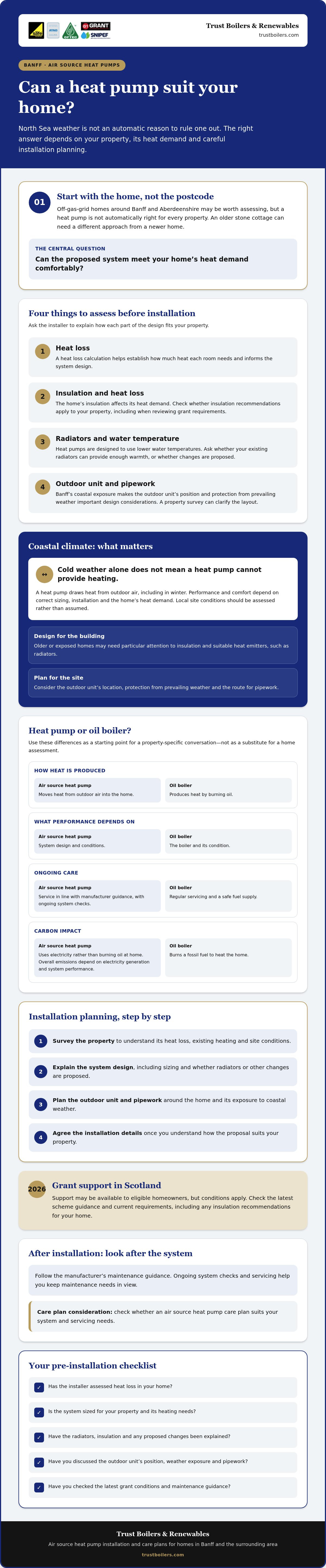
A well-planned installation should include clear communication about what will happen in your home and when. For air source heat pump installation Banff, the process usually begins with a property survey, followed by system design, installation, testing and handover. The exact work depends on your home, existing heating and the agreed specification.
During the initial survey, the installer assesses your property, heating needs and existing pipework. They’ll use this information to plan the system and discuss where the outdoor unit and internal components could go. In a coastal town such as Banff, ask how the proposed location accounts for salt-laden air, strong winds, access for future maintenance and the manufacturer’s siting guidance.
The outdoor unit also needs a considered position in relation to nearby homes and quieter parts of the garden. Ask how noise will be assessed and whether the chosen location could affect neighbours. Your installer should explain the reasoning behind the design, including any limits created by the building or site.
Before work starts, confirm the planned sequence, which areas of the home the team will need to access and how disruption will be managed. Pipework may need adapting to suit the new system. The installer should check whether your radiators can provide the required heat at the system’s operating temperatures. If not, the design may include radiator upgrades. Underfloor heating is another option to discuss where suitable.
Agree practical details in advance, such as protecting floors and keeping work areas tidy. If you expect a “boots off” approach, confirm this with the installation team rather than assuming it is standard. Ask who will carry out the work and whether any part will be subcontracted, so you know who is responsible throughout.
Once the equipment and pipework are installed, the system needs to be checked and commissioned before handover. The installer should show you how to use the controls, explain settings that affect day-to-day comfort and tell you what to do if you have questions. Ask for the relevant system information and maintenance guidance. Make sure you understand how to adjust the controls without changing settings you’re unsure about.
Before booking, discuss the survey, proposed unit position, work sequence and handover with your installer. For local help with an installation in Banff, talk to Trust Boilers & Renewables.
Installation is only the beginning. To look after your heat pump, follow the manufacturer’s maintenance guidance and arrange an annual maintenance visit where recommended. Warranty terms vary, so check whether servicing by a suitably qualified professional is required to keep your specific warranty valid. Keep records of visits and any work carried out.
Trust Boilers & Renewables offers air source heat pump care plans for homeowners in Banff and the surrounding area. A planned approach can help you keep track of servicing and system checks, rather than waiting until you notice a change in performance. Maintenance may help identify developing issues, although no service plan can prevent every fault.
A care plan offers a route for arranging ongoing support and keeping your system’s service history in order. Ask what the plan includes, how visits are scheduled and whether repair labour is covered. Checks vary by heat pump and manufacturer, but a technician may inspect components, clean filters where appropriate and check refrigerant-related parts of the system. Leave these tasks to a qualified professional rather than attempting them at home.
If you have an oil or gas boiler as well, you can read about a boiler care plan in Aberdeenshire and compare the type of ongoing support that suits your heating setup. For your heat pump, ask how the care plan aligns with the manufacturer’s servicing instructions and warranty conditions.
You can keep an eye on the system without opening the unit or adjusting parts you’re unsure about. Banff’s coastal conditions can bring windblown leaves and sea-borne debris, so check that the area around the outdoor unit remains clear. Don’t remove panels or attempt to clean internal components. If anything looks damaged or blocked, contact a qualified professional.
As colder weather approaches, check that you understand the controls and know who to contact if the system behaves differently. A local care plan can make routine maintenance easier to organise and give you a familiar point of contact after air source heat pump installation Banff. Ask Trust Boilers & Renewables about an air source heat pump care plan.
Choosing a heat pump for your Banff home starts with a careful assessment, not a one-size-fits-all recommendation. Correct sizing, suitable insulation and thoughtful placement can all help your system meet your household’s needs through coastal weather. Check current Scottish grant eligibility before committing, as funding depends on scheme conditions and your circumstances.
For air source heat pump installation Banff, check the installer’s credentials and whether they meet any requirements for a grant application. Planned maintenance can help you care for the system over time. Trust Boilers & Renewables installs air source heat pumps and offers aftercare for homes in the area, including Fraserburgh, Peterhead, Aberdeen, Huntly, Keith, Buckie, Banff, Aberlour and Elgin.
If you’re considering a change from oil or LPG, discuss your property and heating needs with Trust Boilers & Renewables. Ask about an air source heat pump for your Banff home.
Start with a property assessment and a clear system design. The survey should consider heat loss, existing radiators, pipework, insulation and the outdoor unit’s proposed position. Ask the installer to explain how the design suits your home and what work is included. If you’re checking Scottish grant eligibility, confirm the current Home Energy Scotland requirements before proceeding, as scheme conditions and your circumstances affect eligibility.
Yes, a traditional stone house can be suitable, but its heat loss and existing heating need careful assessment. Stone construction alone doesn’t determine whether a heat pump will work well. A survey should consider insulation, draughts, room-by-room heat demand and whether radiators can deliver enough warmth. Homeowners in Banff, Keith and nearby towns should ask for a design based on their property, not a standard system recommendation.
Noise varies by unit, its operating conditions and where it’s installed, so ask your installer about the specific model under consideration. Placement can help reduce disturbance, particularly near bedroom windows, neighbouring homes and quieter garden areas. In coastal Banff, the position also needs to account for wind exposure and service access. For installations using permitted development rights, ask how the required noise assessment will be addressed.
Possibly. The installer needs to check whether each radiator can heat its room adequately with the lower water temperatures typically used by a heat pump. The answer depends on the radiator size, room heat demand and the home’s insulation. Some radiators may be suitable to retain, whilst others may need upgrading. Ask for the assessment and proposed changes to be explained before agreeing the system design.
There isn’t one fixed timescale for every home. The work involved depends on the system design, access, pipework changes and whether radiators or other parts of the heating system need upgrading. Ask your installer for a planned schedule after the survey, including how heating access will be managed during the work. This gives you a clearer expectation than relying on a general estimate for another property.
Not every installation follows the same planning route, so check the requirements for your property with the local planning authority before work begins. Some installations may use permitted development rights, subject to conditions. In 2026, the MCS 020a noise assessment standard is the accepted route for assessing noise for heat pumps installed under permitted development rights. Ask your installer to explain the assessment and any site-specific considerations.
A correctly designed air source heat pump can provide heating in cold Scottish weather, though its performance can vary with outdoor conditions and the home’s heat demand. Good system sizing, suitable radiators and attention to heat loss all matter. Keep to the installer’s operating guidance, and don’t change unfamiliar settings if the system behaves differently. Ask your installer how to recognise normal operation and when to seek advice.
Compare how each system would meet your home’s heating needs, rather than relying on a general claim about performance. Consider your household’s heating pattern, the property’s heat demand, the proposed heat pump design and the oil boiler’s condition. Ask an installer to explain the assumptions behind any comparison and how outdoor temperatures may affect operation. Homeowners in Fraserburgh, Peterhead, Aberdeen, Buckie, Huntly, Aberlour and Elgin should assess their own circumstances.
FREE Download

Please complete the form below with your details, and one of our team members will contact you.
