

- Call our boiler installation team:
- 01261 394011
Please complete the form below with your details, and one of our team members will contact you.
Trust Boilers
Imagine the temperature outside has dropped well below freezing, the wind is whistling across the glen, and you suddenly realise the radiators have gone stone cold. It’s a situation every rural homeowner in the north of Scotland dreads, particularly when finding a dependable oil boiler engineer Highlands families can rely on feels like a difficult task during the height of winter. You shouldn’t have to spend the coldest months worrying about system inefficiencies or the rising cost of heating oil.
We know that living off the gas grid requires a proactive approach to home maintenance to ensure your family’s comfort and safety. This guide will show you exactly how to choose a qualified specialist who understands the specific demands of Highland weather, helping you avoid the stress of a sudden boiler lockout. We will cover everything from the importance of OFTEC regulations to practical steps for improving fuel efficiency, giving you a clear path toward a more reliable and cost-effective heating system.
Living in the Highlands brings a unique set of challenges, especially when the winter frost sets in. For many families in rural Aberdeenshire and Moray, the luxury of mains gas isn’t an option. Instead, we rely on domestic heating oil to keep our homes habitable. This makes the role of a specialist oil boiler engineer Highlands homeowners can trust absolutely vital. These systems operate under significantly higher pressures than standard gas boilers and require a distinct set of technical skills to maintain safely and efficiently.
In places like Keith and Aberlour, being “off-grid” is simply a way of life. However, this independence comes with the responsibility of managing your own fuel supply. Because heating oil prices often fluctuate, your boiler’s efficiency directly dictates your cost of living. An efficient system reduces the frequency of those expensive tanker deliveries. It’s not just about the boiler, though. A local specialist will also monitor the health of your oil tank. In our cold northern climate, condensation can build up inside the tank, leading to water contamination. If that water reaches your burner, it causes a “lockout” just when you need the heat most. A proactive engineer anticipates these issues before they leave you in the cold.
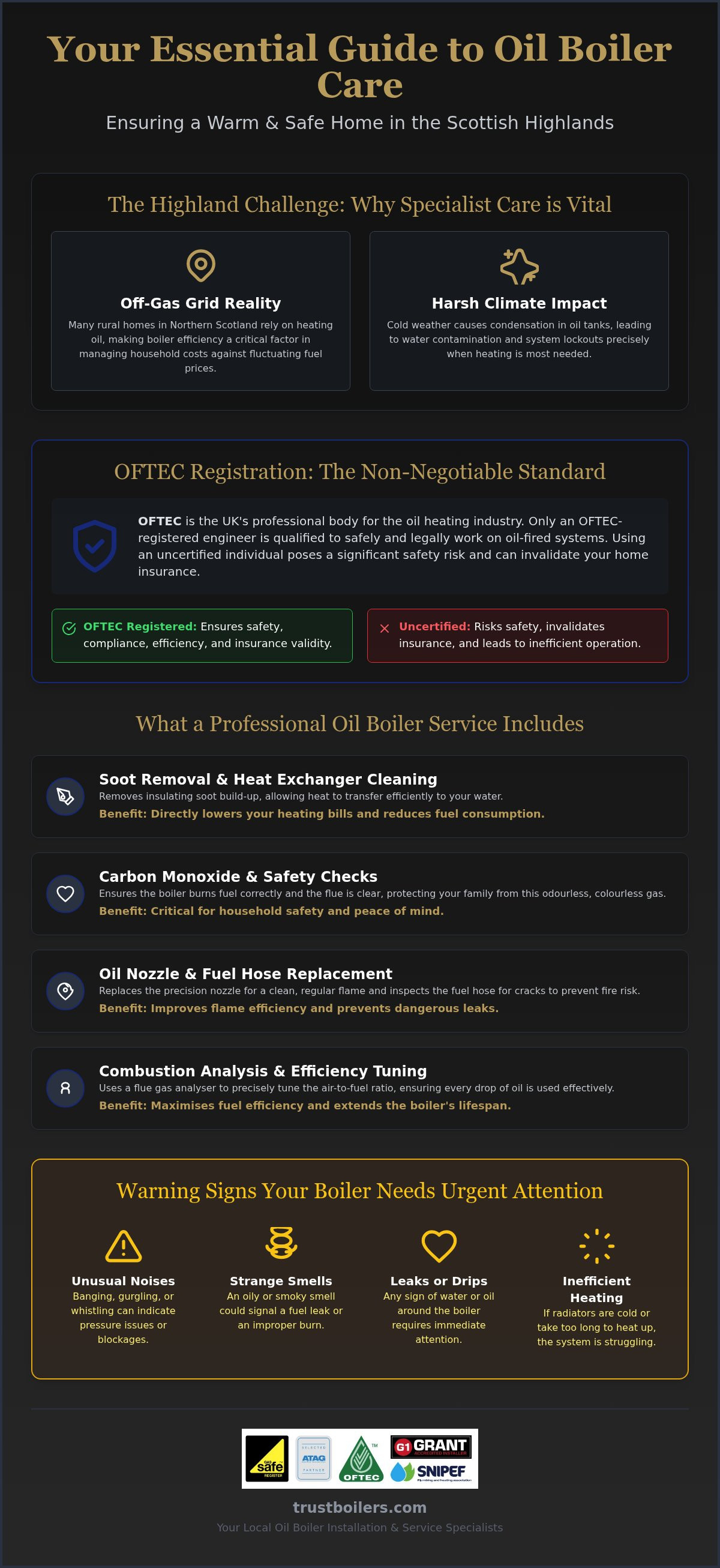
Why can’t you just call a general gas engineer? The answer lies in the specific mechanics of liquid fuel. Whilst a Gas Safe engineer is an expert in their field, they aren’t qualified to work on oil systems unless they hold a separate OFTEC registration. OFTEC is the lead professional body for oil heating in the UK. Choosing an uncertified person to service your system isn’t just a safety risk; it can also invalidate your home insurance. When you understand the technical complexity of How an Oil Boiler Works, you realise why specialist tools and training are essential. The system must atomise fuel under high pressure to create a clean, efficient flame. Without the right calibration, your boiler will burn through fuel too quickly and soot up the internal components, leading to a much shorter lifespan for the appliance.
Have you ever wondered why a simple “clean” isn’t enough to keep your heating system in top shape? A professional service is a detailed technical audit of your entire setup. An oil boiler engineer Highlands families trust will look far beyond the burner box. They start by tackling soot build-up. Even a thin layer of soot on the heat exchanger acts as an unwanted layer of insulation, preventing heat from transferring efficiently to your water. This forces your boiler to burn significantly more fuel to reach the same temperature, which quickly inflates your monthly heating bill.
Safety is the primary objective of every visit. Whilst improved efficiency saves you money, a carbon monoxide check protects your household. Oil boilers can produce this odourless, colourless gas if they aren’t burning fuel correctly or if the flue is obstructed. During the visit, your engineer will also replace the oil nozzle. This tiny, precision component regulates the fuel spray; if it’s worn or clogged, the flame becomes irregular and inefficient. They’ll also check the flexible fuel hose for signs of cracking or perishing, as a leak here is a significant fire risk. If you want to ensure your system is handled by a qualified professional, you can book a comprehensive boiler service with our local team.
Modern engineers use specialised flue gas analysers to measure oxygen and carbon monoxide levels. This isn’t guesswork. By reading these levels, an OFTEC registered engineer can “tune” the air-to-fuel ratio with extreme precision. This ensures the flame burns at peak efficiency, extracting every possible bit of energy from your oil. Regular tuning doesn’t just lower your bills. It also reduces the mechanical strain on internal components, often extending the life of a boiler by several years.
The service extends beyond the boiler casing, requiring the keen eye of an oil boiler engineer Highlands residents can trust for a full site assessment. In our region, external tanks face particularly harsh weather. Your engineer will check for “bellying”, where the sides of a plastic tank bulge, or hairline cracks that could lead to a disastrous environmental spill. They also look for water contamination. Cold northern nights cause condensation to form inside the tank, and water in your fuel lines is a common recipe for a winter breakdown. Finally, they’ll test the “Fire Valve.” This is a critical safety device that automatically cuts off the fuel supply if it detects excessive heat, ensuring your home remains protected according to current UK safety regulations.
Does your boiler only get your attention when it stops working? Many homeowners in rural Scotland adopt an “if it isn’t broken, don’t fix it” mindset. However, by the time a system actually fails, you are often facing a much larger bill and a freezing home. An experienced oil boiler engineer Highlands residents trust will tell you that boilers rarely fail without warning. They leave breadcrumbs. Recognising these subtle signals is the difference between a simple part replacement and a total system collapse during a January cold snap.
One of the most common signs of trouble is the “lockout” button. If that small light on your burner glows red, the system has detected a safety issue and shut itself down. It is tempting to simply press it and hope for the best. Don’t. Whilst one reset might clear a minor glitch, repeatedly forcing the boiler to start can lead to a dangerous build-up of unburnt fuel in the combustion chamber. If your boiler is locking out frequently, it’s a clear cry for help that requires a professional diagnosis to prevent a more serious failure.
You can often spot a problem just by looking and listening. A healthy oil flame should be crisp and clean; if you notice yellow or smoky flames through the sight glass, your burner is struggling with incomplete combustion. This is usually accompanied by soot marks appearing around the boiler casing or the flue outlet. These marks are a red flag for carbon monoxide risks and should never be ignored. You should also listen for unusual noises. Banging, whirring, or a sound like a whistling kettle (known as “kettling”) often indicates a build-up of sludge or limescale within the heat exchanger. These deposits restrict water flow and force the unit to work much harder than it should.
At what point do you stop repairing and start replacing? Age is the biggest factor. If your boiler is over 15 years old, it likely operates at around 70% efficiency. This means for every pound you spend on oil, 30 pence is literally vanishing up the flue. Modern condensing models from brands like Grant or Worcester Bosch achieve efficiencies of 90% or higher. When you consider the long-term savings on fuel, a new boiler installation Aberdeenshire families choose can often pay for itself within a few years.
Safety regulations also evolve. Older setups may no longer comply with current UK oil storage regulations, which could complicate your home insurance or any future property sale. If you find yourself calling an oil boiler engineer Highlands specialist for the third time in a single season, you are likely throwing good money after bad. A proactive replacement allows you to choose the best system for your home on your own terms, rather than making a rushed decision during an emergency.
Finding a reliable oil boiler engineer Highlands families can trust requires more than a quick search online. Because your heating system is the heart of your home during a long northern winter, you need a specialist who understands the unique demands of rural life. Before you book any appointment, your first step should always be to verify their OFTEC credentials on the official register. This ensures the technician has undergone the rigorous training necessary to handle high-pressure liquid fuel systems safely and legally.
Beyond basic qualifications, ask a potential engineer about their experience with specific regional issues. Do they know how to handle water contamination in fuel lines? This is a common headache in our damp climate. You should also check for local references in towns like Elgin, Keith, or Banff. A reputable business will have a track record of reliability amongst your neighbours. It is also wise to confirm if they carry common spare parts, such as various nozzle sizes and filters, on their van. This simple preparation often prevents the need for a second visit and an additional call-out charge.
Geography plays a massive role in heating maintenance. You want an engineer who understands the local topography and weather patterns. When a heavy snowfall hits, you need a partner who is committed to reaching remote locations and knows the backroads of Moray and the Highlands. Choosing a business that supports the local community ensures you are not just another number on a spreadsheet for a national corporation. A local specialist acts as a “Reliable Guardian” for your property, taking pride in keeping their neighbours warm and safe.
When you receive a quote, look for total transparency. Does the price include the nozzle, the oil filter, and VAT? The cheapest headline figure often leads to “hidden” extras once the work is underway. We find that homeowners prefer the stability of fixed-price boiler care plans. These plans move away from the stress of one-off repair bills and toward a philosophy of preventative maintenance. By investing in a long-term care strategy, you ensure your system remains efficient and your fuel costs stay as low as possible. If you are ready to secure your home’s heating for the years ahead, you can contact our Highland engineering team today to discuss a tailored maintenance schedule.
Choosing an oil boiler engineer Highlands residents can rely on is about more than just fixing a leak; it’s about finding a partner who takes responsibility for your home’s stability. At Trust Boilers & Renewables, we view ourselves as a “Reliable Guardian” for households across the Highlands and Moray. We don’t just react when things go wrong. We work alongside you to anticipate problems, ensuring your heating system remains a source of comfort rather than a cause for concern. Our team is deeply rooted in the local community, providing a level of care that national corporations simply cannot match.
Keeping a rural home warm requires consistency. Our dedicated Gas & Oil Care Plans are designed to take the guesswork out of maintenance. These packages include your essential annual service, expert advice on system health, and priority call-outs when you need us most. For residents in remote areas or towns like Banff, Buckie, and Aberlour, this continuity provides genuine peace of mind. You won’t have to scramble for a technician during a cold snap. Instead, you’ll have a dedicated team that already knows your system’s history and requirements. Signing up is a straightforward process, allowing you to secure your home’s efficiency with a single conversation.
Whilst oil remains a vital fuel for many, we understand that the landscape of home heating is changing. Maintaining your current boiler at peak performance is the first step toward exploring broader renewable energy solutions. When the time is right for your property to transition, we are here to guide you through the installation of air source heat pumps. Many older, stone-built Highland properties benefit from “hybrid” setups, where a well-maintained oil boiler works in tandem with renewable technology to provide reliable heat even in extreme conditions. Our team is committed to helping you find the most efficient path forward, whether that means optimising your current setup or planning a full upgrade. Contact Trust Boilers & Renewables for expert oil servicing today to ensure your home stays protected for the long haul.
Ensuring your home remains a sanctuary against the elements requires more than just reactive fixes. As we have explored, the combination of specialist technical knowledge and local geographical understanding is what keeps a rural heating system running at peak performance. By prioritising annual maintenance and recognising the early warning signs of wear, you protect your household from the risk of sudden failure. Finding a qualified oil boiler engineer Highlands residents can rely on ensures that your system remains efficient, safe, and ready to handle whatever the Scottish weather brings.
Our team at Trust Boilers & Renewables is dedicated to providing that sense of stability for families across the region. We understand the unique pressures of Highland life and the importance of having a dependable specialist just a phone call away. If you are ready to move from the anxiety of potential breakdowns to the comfort of guaranteed support, we are here to help. You can Secure your home with a Trust Boilers & Renewables Oil Care Plan today and benefit from our commitment to safety and long-term reliability. Let’s work together to keep your home warm and efficient for many seasons to come.
You should have your oil boiler serviced at least once every twelve months to ensure it remains safe and efficient. In our northern climate, systems often work harder for longer periods, which can lead to faster soot build-up. An annual check-up identifies minor wear before it develops into a costly breakdown during the coldest weeks of the year.
No, a standard gas engineer cannot work on oil systems unless they hold specific OFTEC qualifications. The mechanics of liquid fuel burners are entirely different from gas appliances, requiring specialised tools and calibration techniques. Hiring a dedicated oil boiler engineer Highlands specialist ensures your technician has the correct training to handle high-pressure oil burners safely.
Black smoke is a primary indicator of incomplete combustion, usually caused by an incorrect air-to-fuel ratio or a worn burner nozzle. This soot isn’t just an environmental concern; it coats the internal heat exchanger and forces your boiler to burn more fuel to reach the same temperature. You should turn the system off and call a professional to prevent further damage.
If your boiler locks out, first check that you have enough fuel in your tank and that the supply valves are open. You can try pressing the reset button once, but if the system fails to fire or locks out again immediately, do not keep trying. Repeatedly resetting a locked-out boiler can cause unburnt fuel to pool in the combustion chamber, creating a safety hazard.
The cost of a service depends on the complexity of your heating system and whether specific parts like nozzles or flexible hoses need replacing. Whilst prices vary, a professional service is a vital investment that prevents the much higher costs of emergency repairs. Many homeowners find that a dedicated Care Plan is the most predictable way to manage these essential maintenance costs.
It is rarely cost-effective to repair a 20-year-old boiler because the efficiency levels are significantly lower than modern condensing models. Older units often struggle to reach 70% efficiency, meaning thirty pence of every pound you spend on oil is wasted. A new installation provides better reliability and often pays for itself through noticeably lower annual fuel bills.
Yes, you need an engineer who is specifically qualified to work on vaporising or dry-range burners found in traditional cookers. These appliances require different calibration methods than standard central heating boilers to ensure they run cleanly. A qualified oil boiler engineer Highlands specialist can confirm if they hold the specific OFTEC modules required for these specialist cookers.
You can prevent water contamination by ensuring your tank lid is always securely fastened and checking the seals for signs of perishing. In the Highlands, rapid temperature changes often cause condensation to form inside the tank. Having your engineer check for water during your annual service and using a high-quality fuel filter are the best ways to protect your burner.
FREE Download

Please complete the form below with your details, and one of our team members will contact you.
