

- Call our boiler installation team:
- 01261 394011
Please complete the form below with your details, and one of our team members will contact you.
What makes an Ecodan installation comfortable and dependable through an Aberdeenshire winter? The answer starts with your home, not simply the heat pump. If you’re comparing Mitsubishi Ecodan installers Aberdeenshire homeowners can rely on, it’s understandable to wonder whether your property and existing radiators are suitable, and how local conditions might affect performance.
A well-designed system takes account of your home’s heat needs, insulation and heating setup before installation begins. That assessment helps determine whether an Ecodan is a sensible fit and what changes may be needed. In towns from Fraserburgh and Peterhead to Aberdeen, Huntly, Keith, Buckie, Banff, Aberlour and Elgin, property age, exposure to cold and wind, and the demands of winter all make careful planning worthwhile.
This guide explains what to assess before committing, why installer competence and MCS standards matter, and how installation quality can support reliable operation. Trust Boilers & Renewables is based in Portsoy and brings more than 30 years of collective trade experience to local heating work. You’ll also learn how ongoing heat pump care can help look after your system after installation.
Before you decide on an Ecodan, find out whether your home has had a detailed assessment. A heat pump should be planned around the building and the way you use heat, rather than selected on the assumption that one system will suit every property. For homeowners comparing Mitsubishi Ecodan installers Aberdeenshire, the quality of that early assessment is a useful sign of whether the recommendation is being shaped around their home.
A home heat pump assessment is a review of your building, heating system and household needs to inform whether and how a heat pump could be planned for your property. It helps identify questions that need resolving before a design is prepared, without guaranteeing that a particular system will be suitable.
The assessment should consider how heat moves through your home and what each space needs to feel comfortable. Insulation, the building layout, heat demand and the condition and size of existing radiators or underfloor heating all help inform the design. A room-by-room review means considering differences between spaces, rather than treating the whole property as if every room loses heat in the same way.
Your existing emitters, the parts of the heating system that release warmth into rooms, are especially relevant. If radiators are being retained, their ability to heat each room as part of the proposed system needs consideration. Underfloor heating has different design requirements, so its layout and how you use each area should also be understood. Look for a design that explains how the heat demand of individual rooms relates to the planned heating system. These details help shape a system around assessed needs, rather than choosing its size by guesswork.
A basic introduction to how heat pumps transfer heat is available in Heat pump technology explained. The practical question for your home, though, is how its heat demand and existing system shape the installation plan.
Age alone doesn’t rule a property in or out. An older stone home near Huntly or a rural property outside Banff may need closer attention to insulation, room layout and the condition of its heating system. Available space also matters, both for the equipment and for fitting the system into the property’s surroundings. Each factor should be considered as part of the home’s overall needs.
Aberdeenshire’s colder spells and exposed locations can make local conditions relevant to planning, but they don’t provide a simple yes-or-no answer. The assessment should consider how the house retains heat and how you want to use it. If improvements or adjustments are identified, understanding those alongside the heating design can help you make a more informed decision. For wider background on heat pump suitability for Scottish homes, consider how property condition and system design work together.
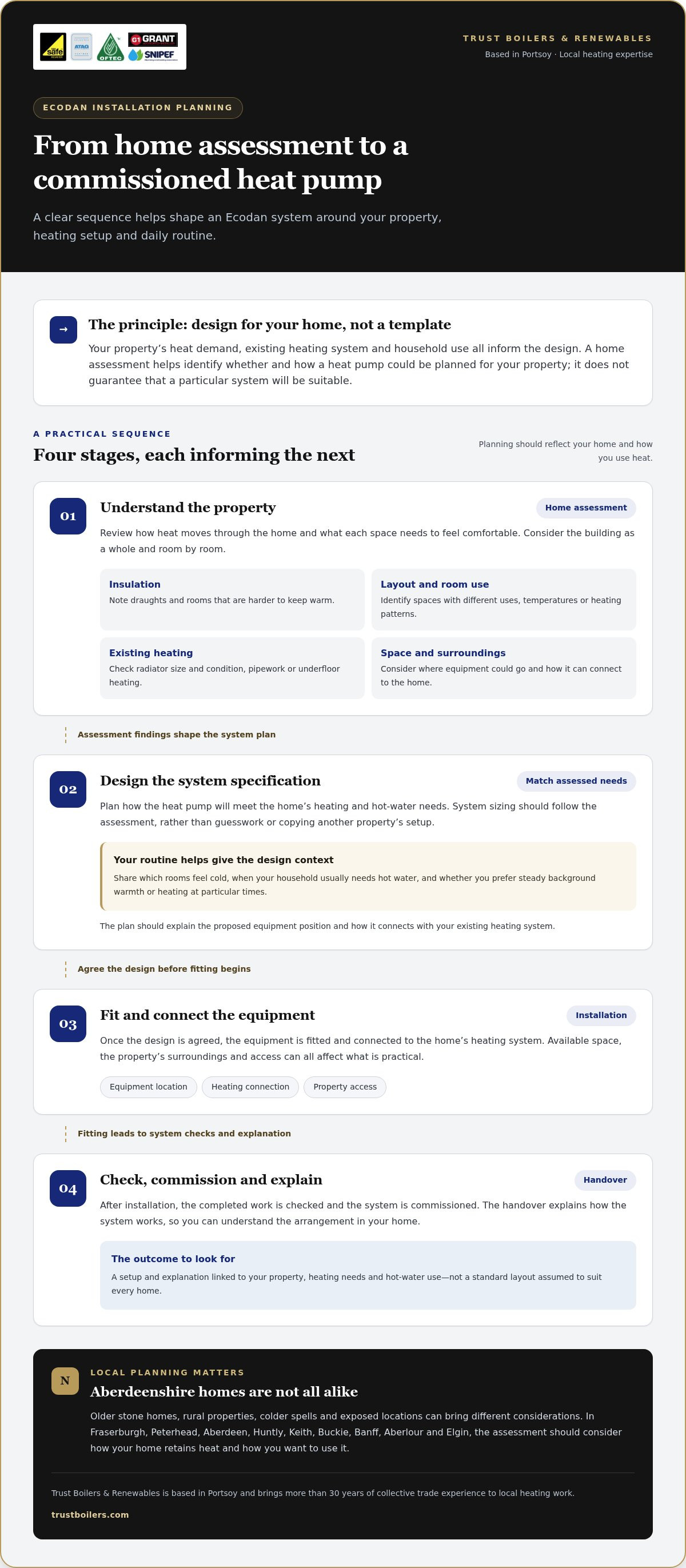
A well-planned installation follows a clear sequence: understand the home, design the heating arrangement, fit the equipment, then check and explain how the system works. Each stage informs the next. For you, that means the proposed setup should reflect the property and its use, rather than rely on a standard layout or a guess at what size system is needed.
Correct system design matters because it matches the heating equipment and controls to your home’s needs, supporting comfortable, reliable operation. The equipment itself is only part of the job. The way it connects with your heating and hot-water arrangements also needs careful planning.
Information gathered about the property helps shape the system specification: the plan for how the heat pump will meet the home’s heating and hot-water needs. Sizing means matching the system to those assessed needs, not selecting it by guesswork or simply copying another home’s setup.
Planning should account for how you heat different rooms, the existing radiators or underfloor heating, and how hot water is provided. You can help by explaining which rooms feel cold, when the household usually needs hot water, and whether you prefer steady background warmth or heating at particular times. These details give the design practical context.
The proposed equipment location also matters. The installation plan needs to consider available space and how the equipment can connect with the home’s heating system. In a property in Peterhead or an exposed rural location, the surroundings and access may shape what is practical. The plan should explain how the proposed arrangement relates to your property, including the equipment position and connection to the existing system.
Once the design is agreed, installation involves fitting the equipment and connecting it to the home’s heating system. The installer then checks the completed work and commissions the system. Commissioning means setting up and testing the installed system to confirm it is operating as intended. It is a key step, not an administrative extra.
For a homeowner, a useful handover should make everyday operation clear. You should be shown how to use the controls, how to make routine adjustments and what basic care the system needs. Take the opportunity to learn how to set a comfortable schedule, what to do if you’re unsure about a setting, and which documents to keep with your home records. Clear guidance helps you use the system with confidence after the installation team has finished.
Trust Boilers & Renewables installs air-source heat pumps for local homes, with ongoing support and heat pump care plans available after fitting. If you’re considering an installation, a home heating discussion with Trust Boilers & Renewables is a practical way to talk through how the proposed design could fit your property.
Credentials can help you understand an installer’s experience and working standards, but they don’t all mean the same thing. MCS compliance, other professional accreditations and a manufacturer’s partner status are separate signals. If you’re comparing Mitsubishi Ecodan installers Aberdeenshire, it’s worth knowing what each one can tell you, and what it can’t.
Trust Boilers & Renewables identifies MCS compliance and professional accreditations as trust signals. These provide useful context when discussing renewable heating work, but they are distinct from a manufacturer’s partner status.
MCS, the Microgeneration Certification Scheme, is a UK quality assurance scheme for small-scale renewable energy. For you, it’s a relevant indicator to consider when discussing a heat pump installation. It isn’t a substitute for understanding the proposed design or what will happen during fitting and handover.
Good records make the work easier to understand and refer back to. You should be able to follow the proposed system arrangement, keep the installation and commissioning information, and understand the controls explained at handover. Clear design and system documents help you know what has been fitted and how it is intended to operate.
| Signal | What it can indicate | What it does not prove by itself |
|---|---|---|
| MCS compliance | Alignment with a recognised quality assurance scheme for small-scale renewable energy. | Mitsubishi manufacturer partnership or a particular outcome in your home. |
| Professional accreditations | Relevant professional recognition or assessed competence, depending on the accreditation. | That every accreditation covers the same work or confirms a specific Ecodan design. |
| Manufacturer partner status | A relationship with a manufacturer under its own partner arrangements. | That other credentials, such as MCS compliance, are automatically included. |
Manufacturer partner categories are distinct from general installation credentials. Renewable heating credentials and manufacturer status are separate matters, so consider each on its own terms when reviewing an installation proposal.
Warranty terms depend on the applicable manufacturer conditions and the system installed. Read the relevant documents for the specific equipment and keep them with your installation records. One installer credential does not, by itself, guarantee a particular warranty.
Aftercare matters too. Trust Boilers & Renewables offers a fifteen-year support commitment for installations, alongside heat pump care plans. This is a stated commitment to support, not a claim that the manufacturer’s warranty lasts for that period. Clear distinctions help you judge the installation, its paperwork and the support available with confidence.
Weather is part of the design picture, not a reason to make blanket promises about how a heat pump will perform. Aberdeenshire homes face different conditions: a sheltered property in Huntly has a different setting from an exposed home near the coast around Fraserburgh or Peterhead. The proposed system and equipment location should reflect the individual property and its surroundings.
Your household’s routine matters just as much. The installer needs to understand when you use heating and hot water, which rooms need to feel warm at different times, and what comfort means to you. If mornings are busy or the house is occupied throughout the day, explain that during planning. It gives the system designer useful context rather than leaving them to assume one routine fits every home.
Low temperatures, wind exposure, access and noise all deserve consideration when deciding where outdoor equipment should sit. There isn’t one placement that suits every property. A sheltered wall, nearby pathway or neighbouring room may affect what locations are practical, so the site and proposed position should be considered in context and explained in plain language.
Before the installation discussion, note any practical constraints: narrow access, gates, steps, landscaping or areas you need to keep clear. Think, too, about where equipment would be least disruptive to your household and neighbours. These observations won’t decide the design on their own, but they help make the conversation specific to your home.
For a broader explanation of how air-source systems work and what to consider in Scotland’s varied housing conditions, see this guide to air-source heat pumps for Scottish homes. It can help you prepare questions about your property and how the system may fit your daily life.
A heat pump may be operated differently from a familiar boiler, so make sure the handover covers the controls and how to set a comfortable routine. Discuss hot-water use, preferred room temperatures and what adjustments are sensible if your schedule changes. If a control setting is unclear, have it explained before you’re left to manage it alone.
It’s also useful to understand what ongoing upkeep involves. An annual maintenance visit is a scheduled appointment for cleaning, testing and calibrating a heat pump’s components. Trust Boilers & Renewables offers air-source heat pump care plans to help manage ongoing system care. You can arrange a home heating discussion with the local team to talk through weather, equipment location and your household’s heating routine.
Once you’ve considered your home and what you need from its heating, the next step is a discussion about the property. Trust Boilers & Renewables is an air-source heat pump installer based in Portsoy, serving homeowners in Aberdeenshire. The team brings more than 30 years of collective trade experience, with work guaranteed for 12 months.
A useful first conversation is about understanding your home, not rushing you towards a particular system. It gives you a chance to explain what’s working, what isn’t, and what you’d like your heating to do. That context helps shape the next steps around your property.
You don’t need a technical report to get started. A few notes about the house and your everyday experience can make the discussion more useful. If you have documents about previous heating work or insulation, keep them nearby, but don’t worry if you don’t have every detail.
These details help move the conversation from general questions to your home’s actual needs. You can also mention concerns about equipment location, household access or changes you’re considering, so they can form part of the discussion.
Support doesn’t have to end once equipment is fitted. Trust Boilers & Renewables offers a fifteen-year support commitment for installations. This describes the company’s support commitment; it shouldn’t be confused with a manufacturer’s warranty, whose terms depend on the applicable conditions for the installed system.
For planned upkeep, the company also offers air-source heat pump care plans. A care plan can help you organise ongoing maintenance, while keeping your system’s service records together gives you a helpful reference over time. The handover should explain what routine care involves and which documents relate to your system.
If you’re ready to talk through your home’s heating needs, arrange an installation discussion with Trust Boilers & Renewables. A clear conversation is a sensible first step towards a proposal shaped around your property.
You don’t need to have every detail decided before discussing a possible Ecodan installation. If you’re still weighing up whether your property is suitable, use that uncertainty as a starting point: describe what you’re hoping to improve and what you’re unsure about. A focused conversation can help turn general questions into practical points to consider for your home.
For homeowners considering Mitsubishi Ecodan installers Aberdeenshire, the next step is to talk through the property and your priorities before committing to a system. That gives you space to understand the proposed approach and decide whether it feels right for your household.
Trust Boilers & Renewables installs air-source heat pumps for homes in and around Fraserburgh, Peterhead, Aberdeen, Huntly, Keith, Buckie, Banff, Aberlour and Elgin. Discuss an air-source heat pump installation with Trust Boilers & Renewables and take the decision one clear step at a time.
They may suit a range of homes, but suitability depends on the property and its heating needs, not just the local climate. Exposure, insulation, available space and the existing heating arrangement all inform the design. A home in coastal Fraserburgh or Buckie may face different site conditions from one in Huntly or Keith. A property-specific assessment is the sensible way to explore whether an Ecodan installation could work for your household.
An installer considers how the home retains heat, how its rooms are used and how the existing heating system is set up. That includes looking at radiators or underfloor heating, hot-water arrangements and practical options for equipment location. You can help by describing rooms that are difficult to keep comfortable and your household’s daily routine. These details help shape a proposal around your home rather than a generic layout.
MCS certification isn’t simply the same thing as permission to fit an Ecodan. It is relevant if you intend to apply for a Scottish heat pump grant, as the scheme’s eligibility requirements may include MCS certification for both installer and product. Check the current terms for the funding route you plan to use. This helps you understand whether certification is needed for your circumstances, rather than assuming it applies to every installation.
It can be considered for an older home, but the building’s age alone doesn’t settle suitability. A stone house in Banff or Aberlour, for example, may need particular attention to heat loss, insulation, radiator capacity and the condition of its pipework. The assessment should identify any factors that need addressing in the design. If changes are proposed, understand how each one relates to comfort and the home’s heating requirements.
There isn’t one reliable timescale for every installation. The work can depend on the home’s existing heating arrangement, what needs to be changed and the practical conditions at the property. A straightforward replacement and a project that needs adjustments to radiators or pipework won’t necessarily follow the same schedule. Once the design and scope are understood, the expected sequence of work and any preparation needed at home should be clear.
Follow the maintenance guidance supplied for your specific system, and arrange servicing as advised. An annual maintenance visit can include cleaning, testing and calibrating components. You can also keep the area around the outdoor unit clear and note any changes in heating or hot-water operation to discuss at service time. Don’t remove covers or attempt internal repairs yourself. Trust Boilers & Renewables offers air-source heat pump care plans for planned upkeep.
No. Mitsubishi manufacturer status and MCS certification refer to different credentials, so one doesn’t automatically prove the other. Manufacturer status relates to a manufacturer’s own arrangements, while MCS is a quality assurance scheme for small-scale renewable energy. Review the specific credential and what it covers. Trust Boilers & Renewables identifies MCS compliance and professional accreditations as trust signals.
FREE Download

Please complete the form below with your details, and one of our team members will contact you.
