

- Call our boiler installation team:
- 01261 394011
Please complete the form below with your details, and one of our team members will contact you.
What if the cool patch at the bottom of your radiator points to a different problem from trapped air? If you’re wondering why are my radiators cold at the bottom while the top heats up, sludge settling inside the radiator is one possible cause. It can restrict hot water flow, whereas trapped air more often leaves the top cold.
It can be hard to tell which symptom you’re seeing, or to know whether trying a fix could cause a leak. Bleeding a radiator may help if air is trapped, but it won’t remove sludge. The pattern across your radiators can offer useful clues, so a few careful observations can help you decide what to do next.
This guide explains likely causes, safe checks and when to arrange a professional assessment. We’ll also cover how routine maintenance can keep your heating system under review. For homes in Fraserburgh, Peterhead, Aberdeen and nearby towns, Trust Boilers & Renewables provides boiler servicing and repair, backed by more than 30 years of collective trade experience.
It’s frustrating when a radiator feels warm near the top but cool lower down, especially if the room still feels chilly. A cold bottom means the lower part stays noticeably cooler than the upper part while the heating is running. The difference may be slight, or there may be a broad cool patch across the base.
Radiators transfer heat into a room through their surface and the movement of warmed air. The Radiator (heating) principles help explain why a section that isn’t warming as expected can affect how evenly heat spreads. However, a temperature pattern alone can’t identify the cause. The answer to “why are my radiators cold at the bottom” also depends on what’s happening elsewhere in the system.
Hot water needs to circulate through a radiator for its surface to warm evenly. If circulation is restricted, cooler water may remain near the bottom instead of being replaced by water heated by the boiler. One possible reason is sludge, a mixture of rust and other debris that can build up inside a heating system and affect water flow.
That’s a possibility to consider, not a diagnosis. A single radiator with a cool lower section may point to a local issue, while similar symptoms across several radiators may suggest a wider circulation or water-quality problem. Neither pattern proves the cause, and the right response depends on the system’s condition.
It can be. Trapped air is more commonly associated with a radiator that feels cooler at the top, because air can collect in its upper section and interfere with heating. A cool lower section is more often linked with restricted circulation or deposits. These are general clues, not a reliable way to diagnose a fault without further investigation.
Notice where the radiator is cool and whether the same pattern appears in other rooms. If just one radiator is affected, that gives different information from several radiators showing a similar change. Also consider whether the pattern persists during a normal heating cycle, rather than judging it as soon as the heating comes on.
Bleeding a radiator releases trapped air, so it may help when the top is cold and air is suspected. It won’t remove sludge or correct every cause of poor circulation. Don’t treat bleeding as a universal fix. If you’re unsure, or the symptom remains, don’t open valves or alter system components. The temperature pattern is a starting point for sensible checks, not proof that a particular repair is needed.
A cool lower section can have more than one explanation. Sludge and debris may restrict water movement, but a valve that isn’t allowing enough hot water into one radiator could also be involved. The pattern across your home helps build a clearer picture: one affected radiator may suggest a local issue, while several with similar symptoms can point to a wider system concern. Neither pattern confirms the cause on its own.
As a heating system operates, corrosion and other small particles can collect in the water. Over time, this debris may settle in radiators or pipework and make it harder for water to circulate freely. A radiator may then heat unevenly, although a cool bottom alone can’t confirm that deposits are present.
A power‑flush is a cleaning process that moves water and cleaning solution through the heating system to remove sludge and debris. It may be considered if a professional finds evidence of a wider build-up, but it isn’t automatically the right step for every cold radiator. The system should be assessed first so any proposed work addresses the likely cause rather than relying on guesswork.
If one radiator is affected, a heating professional can investigate that radiator and its connection to the system. If several show a similar pattern, they can consider whether circulation or water quality across the wider system may be involved. The distinction matters because the appropriate remedy depends on what the assessment finds.
A thermostatic radiator valve, often called a TRV, controls how much hot water enters an individual radiator in response to the room’s temperature. If its usual control is turned down, that radiator may receive less heat than others. A valve that is sticking or not working as it should may also affect the radiator, but its condition can’t be confirmed from the temperature pattern alone.
Check only the usual control setting and compare the radiator with others. Don’t dismantle the valve, force it or alter other system components. If the setting appears normal but the radiator remains cooler, record what you’ve noticed for a professional to investigate.
Poor circulation describes what may be happening, not which part has failed. It can have several possible causes, so avoid assuming that sludge, a valve or another component is definitely responsible. The number of affected radiators, their temperature pattern and how the system behaves all help guide an assessment. If symptoms persist, professional boiler servicing and repair from Trust Boilers & Renewables can help identify what needs attention before remedial work is recommended.
Comparing radiators can help you describe the problem clearly. With the heating running as it normally does, note which radiators warm, whether their upper sections heat and whether the lower sections stay cooler. Compare them at a similar point in the heating cycle, as a radiator that has only just started warming may not yet show its usual pattern.
| What you notice | One radiator affected | Several radiators affected |
|---|---|---|
| Upper sections | Other radiators warm as usual; the affected radiator may heat unevenly. | Upper sections may warm, while similar cool lower sections appear in more than one room. |
| Lower sections | One radiator stays cooler at the bottom. | The same lower-section pattern appears across several radiators. |
| When it happens | Note whether it persists after the heating has run normally. | Record whether the pattern repeats across the home or changes during heating. |
This comparison is a guide, not a diagnosis. It can help distinguish an isolated symptom from one that may involve the wider central heating system, but it can’t confirm what is causing it.
Look at the affected radiator’s normal control setting and compare it with nearby radiators. Note whether it warms after the heating has been running as usual, and whether its upper and lower sections behave differently from the others. A local valve or water-flow issue may be considered during diagnosis, but the pattern alone won’t identify which, if either, is responsible.
If other radiators heat evenly, that’s useful information to pass on. Don’t dismantle a valve or adjust system components to test a theory.
A repeated pattern across several radiators deserves a wider view. It may be worth checking the central heating system rather than focusing on one radiator alone, particularly if rooms are also taking longer to warm or heating unevenly. Multiple affected radiators deserve a system-level assessment. This doesn’t prove a system-wide fault, but it is a useful reason to record what you’re seeing and seek professional advice if it continues.
If the boiler’s pressure gauge is easy to see, note its displayed reading without changing the system pressure. Don’t remove the boiler casing or try to adjust anything. The reading is information for an assessment, not a diagnosis by itself. Record which radiators are affected, how their tops and bottoms feel, and whether heating is slow or uneven elsewhere.
Scheduled maintenance can keep the heating system under regular review. A boiler care plan guide explains how planned servicing can support ongoing attention to your boiler and heating system. If you’re in Fraserburgh, Peterhead, Aberdeen or a nearby town and the pattern persists, these observations can help a heating professional investigate the issue.
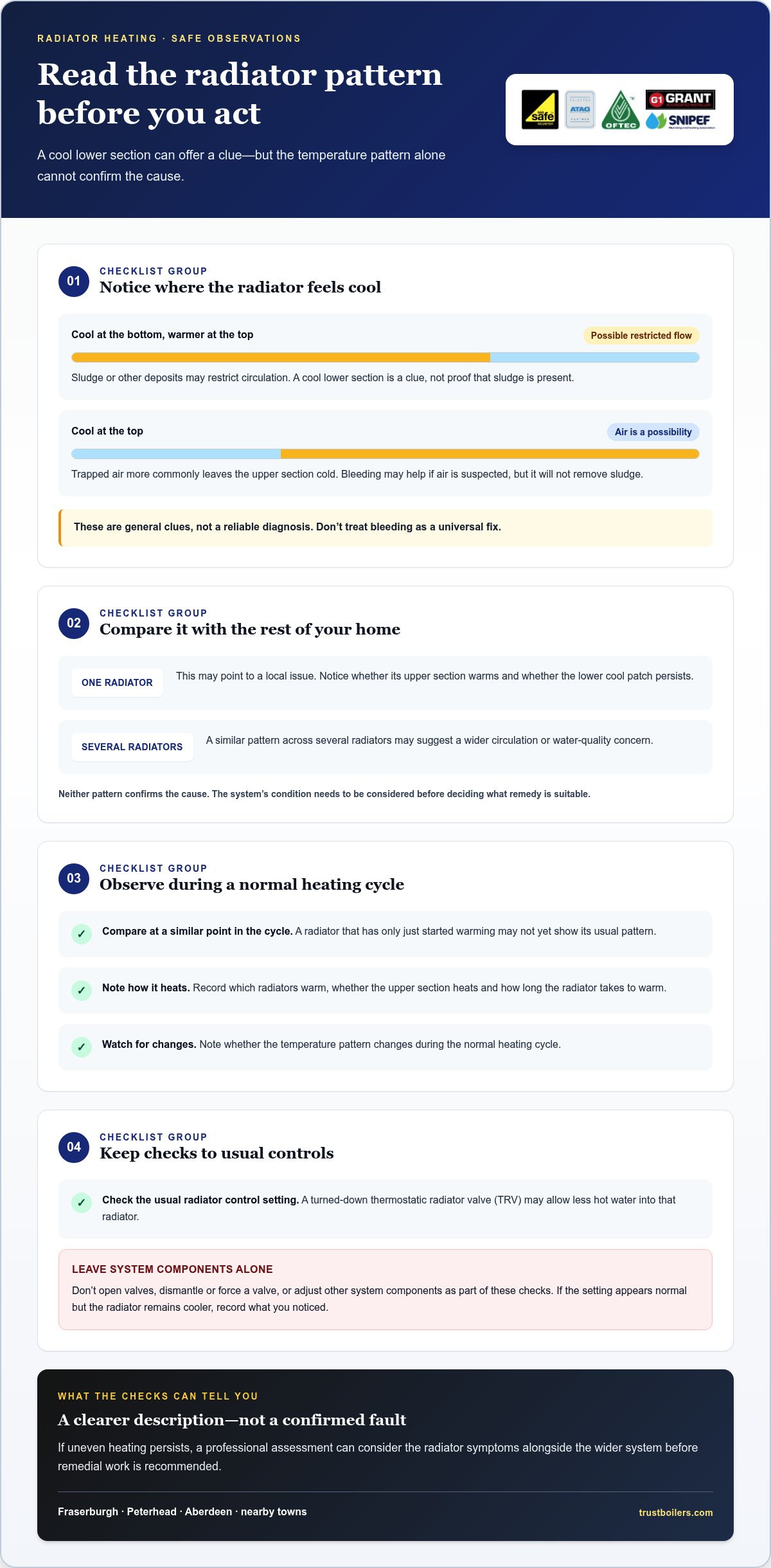
If you’re still asking why are my radiators cold at the bottom, careful observations can help you explain the problem without taking anything apart. Use your heating system as normal. Don’t open valves, remove covers or alter boiler components.
Follow these steps in order:
Alongside the temperature pattern, note whether the room itself warms as expected and whether the radiator makes any unusual noises. These details help describe how the heating behaves during everyday use. If the boiler displays a fault message, write down the wording rather than trying to clear or investigate it yourself.
Bleeding a radiator releases trapped air, so it may not resolve a cold bottom. Don’t treat it as a catch-all fix, and avoid DIY power-flushing or adding chemical treatments. The right remedy depends on what an assessment finds.
Stop your checks if you see a leak, notice unusual damage or aren’t sure how a control works. A recurring boiler fault indication is also a reason to seek professional advice. Don’t remove the boiler casing or work on boiler components.
If uneven heating continues through normal use, arrange a professional assessment rather than trying different fixes. A boiler servicing or repair visit can investigate the radiator symptoms and the system’s behaviour. Trust Boilers & Renewables provides heating support for homes in Fraserburgh, Peterhead, Aberdeen and nearby towns. Arrange professional heating support when your observations don’t explain the problem.
If uneven heating continues despite your safe checks, a professional boiler service or repair visit can help identify what needs attention. You don’t need to know the cause before arranging an assessment. Sharing what you’ve observed, including which radiators are affected and how their temperatures change, gives the engineer a practical starting point for investigating why are my radiators cold at the bottom.
An engineer can consider the symptom history alongside radiator behaviour, visible condition and relevant boiler or system symptoms. They may ask whether the issue affects one radiator or several, whether heating feels slow elsewhere and whether the pattern has changed. These details help build an overall picture, but the cause and any suitable repair can only be determined after assessing the system.
If there are signs of deposits or restricted water movement, a power‑flush, which cleans sludge and debris from heating pipes and radiators, may be considered. It isn’t an automatic remedy. The engineer should assess whether it suits the system before recommending this or other remedial work. Don’t assume a particular repair or outcome in advance.
That assessment matters because the same symptom can have different explanations. A radiator’s controls, its condition and the way the wider system behaves all provide context. A professional can weigh those observations together rather than relying on the cool patch alone.
Regular servicing gives your heating equipment a planned opportunity to be checked, keeping its condition under review and helping bring developing concerns to attention. It can’t guarantee that a fault won’t occur, but keeping a record of maintenance and recurring symptoms can make it easier to explain changes over time.
In colder periods across the North of Scotland, reliable heating is especially important for comfort at home. If your property uses radiators with an air source heat pump, that system can also circulate heated water through a water-based heating circuit. You can learn more about air source heat pump operation to understand how this type of heating works.
If your radiators continue to heat unevenly, or you’ve noticed a leak or boiler fault indication, professional investigation is a sensible next step. Trust Boilers & Renewables supports homes in Portsoy and nearby communities, including Fraserburgh, Peterhead, Aberdeen, Huntly, Keith, Buckie, Banff, Aberlour and Elgin. Arrange local boiler servicing or repair when you’re ready to have the system assessed.
A cool patch is a reason to pay attention, not to take apart a radiator or boiler. If you’re still wondering why are my radiators cold at the bottom, note what you’ve observed and let a qualified engineer assess the system before choosing a repair. That way, the next step can be based on your heating system’s condition rather than guesswork.
Trust Boilers & Renewables is Gas Safe and OFTEC registered. If uneven heating continues or you’ve spotted a leak or boiler fault indication, professional investigation can help clarify what needs attention. Speak with our local heating team about arranging a boiler service or repair for your home.
With an appropriate assessment, you can make a clear, considered plan for restoring comfortable heating in your home.
You can, if you’re confident using the radiator’s bleed point, but take care: switch off the heating and let the radiator cool first to reduce the risk of burns. Protect the wall and floor, and stop if the bleed point is damaged, won’t turn normally or starts leaking. If you’re uncertain, leave it alone and ask a heating professional. Bleeding isn’t a substitute for investigating a persistent cold patch.
Not necessarily. A radiator’s temperature can vary across its surface, and there isn’t one expected temperature that applies to every radiator and heating system. A slight difference may be less concerning than a broad area that stays cool and affects room comfort. Consider whether the room reaches its usual warmth and whether the pattern is a change from normal. Persistent uneven heating is worth discussing with an engineer.
It can affect the radiator’s heating, though it won’t establish why the lower section feels cool. A TRV can also respond to the temperature around its sensor, so curtains, furniture or a radiator cover close to the control may affect how it behaves. Keep the area around the valve clear and observe whether the radiator’s behaviour changes. Don’t remove the valve head or try to repair its internal parts.
No. The temperature pattern alone can’t confirm sludge, and choosing a cleaning treatment without an assessment may not address the actual issue. If the symptom began after work on the heating system, or has gradually changed over time, note that history. Include any previous radiator or system maintenance you know about. Those details can help an engineer decide what further checks are appropriate.
Don’t attempt a power-flush yourself. It involves specialist equipment and system cleaning, and an engineer needs to decide whether it suits the heating system’s condition. If a flush is being considered, useful background includes whether the system has been cleaned before and whether radiators or pipework have been changed. This helps the professional assess the situation before recommending work, rather than treating a cool patch as proof that flushing is needed.
A single radiator behaving differently gives an engineer a useful point of comparison, but it doesn’t identify the cause by itself. Note whether the radiator has recently been moved, replaced or affected by decorating work, and whether its performance changed afterwards. Check the date of your most recent boiler or heating-system service, if you know it. Sharing this context can help focus the investigation on relevant changes at home.
FREE Download

Please complete the form below with your details, and one of our team members will contact you.
